Saturday, April 16, 2011

PENNY FROM HEAVEN by Jennifer L. Holm Book Review


1.    BIBLIOGRAPHY
Holm, Jennifer L. 2006. PENNY FROM HEAVEN. New York: Random House. ISBN 037583687X

2. PLOT SUMMARY
In the summer of 1953, life for almost 12 year old Penny is split between the mother and grandparents she lives with and the Italian relatives of her deceased father who adore her. On one side, her mother is so protective and strict; Penny is not even allowed to swim in a public pool due to her mother’s fear of her catching polio. On the other side, her many uncles, aunts and Nonny will do anything to make up for her father not being here such as buy her expensive coats, a new bicycle and tickets to the Bums baseball games. Even with all of this, Penny still wishes for all the people she loves to quit hating each other, her favorite uncle to stop living in a car and for someone to tell her about her father. One day, while her best friend (and cousin) Frankie and her were searching for their grandfather’s buried treasure in Nonny’s basement, Penny’s arm accidentally gets pulled through the wringer. After spending the summer in the hospital, and overcoming the odds of never using her arm again, Penny learns of the history between the two families, the truth behind her father’s death and even bonds with her new spontaneous step father. Once again, something good arises from something bad.

3. CRITICAL ANALYSIS
Even though this is a fiction story, the inspiration derives from Holm’s own Italian American family. Her own mother was the original Penny, after her grandfather died while her grandmother was pregnant. Items from the story such as the shortwave radio, fancy coats from her uncle, fear of polio, relative living in a car, fancy Italian meals and a grandmother wearing black, were all true stories from Holm’s own family history. Therefore, the authenticity of the time period is not only believable, but personally true. Even the inclusion of Dem Bums helped recreate the details of the 1950’s. The overall theme, the power of family love, prevails as the miracle of Penny’s arm healing is the proof. Children from split homes today will easily relate to the pressures Penny faced of keeping two sides, two different families happy. This novel shines as it shows the ups and downs of being part of a family.

4. REVIEW EXCERPT(S)
Newberry Honor Book
SCHOOL LIBRARY JOURNAL review: “Penny and her world are clearly drawn and eminently believable, made up of seamlessly interwoven details from everyday life. The period is lovingly re-created, from the fear of catching polio to Penny's use of the word swell. An author's note with photos is included.”
BOOKLIST review: “Holm impressively wraps pathos with comedy in this coming-of-age story, populated by a cast of vivid characters (a burping, farting grandpa; an eccentric uncle who lives in his car--"not exactly normal for people in New Jersey"). Concluding with a photo-illustrated endnote explaining Holm's inspirations in family history, this languidly paced novel will appeal most to readers who appreciate gentle, episodic tales with a nostalgic flavor.”


5. CONNECTIONS
*Invite local experts, such as students’ grandparents or other relatives, who remember life in the 1950’s and are willing to speak to the class.
*Research the poem and/or the song “Pennies from Heaven” by analyzing the words/lyrics. Relate the meaning of these to the main character’s (Penny) name.
*Children can research the prejudices against Italian Americans. How did these prejudices affect lifestyles? How was it similar to other races or nationalities that faced prejudices?
*Other books by Jennifer L. Holm:
Holm, Jennifer L. OUR ONLY MAY AMELIA. ISBN
0064408566
Holm, Jennifer L. THE TROUBLE WITH MAY AMELIA. ISBN 1416913734
Holm, Jennifer L. TURTLE IN PARADISE. ISBN 0375836888

ELIJAH OF BUXTON by Christopher Paul Curtis Book Review


1.    BIBLIOGRAPHY

Curtis, Christopher Paul. 2007. ELIJAH OF BUXTON. New York, NY: Scholastic. ISBN 0439023440

2. PLOT SUMMARY
Set in the Elgin Settlement at Raleigh in Canada, also known as Buxton, this gripping historical novel centers around an 11 year old boy named Elijah Freeman. Famous for two reasons, being the first free child born in Buxton and throwing up on Frederick Douglass, Elijah is set to prove he is not as “fragile” as everyone thinks, even though he does cry easily. His vulnerability is the cause for many of his problems such as believing hoop snakes are going to cause his slow, drawn out death, losing a good portion of the fish that he caught and almost being sold to a traveling carnival. Due to the respect that is demanded of children during this time period, young Elijah easily befriends an unworthy “preacher” who acts peculiar all throughout the novel. In the end, this “preacher” steals money that the hardworking Mr. Leroy earned to buy his family out of slavery. Feeling partly to blame, Elijah willingly sets out on a journey with his friend Mr. Leroy to find the “preacher” and the money he stole. Not long after the journey begins, Mr. Leroy dies of a sudden heart attack, leaving young Elijah in an American city that still believes in slaves. Trying to honor a promise made to Mr. Leroy, Elijah faces problems a child his age should not have to face such as shooting another human, leaving people to die and caring for a young baby. Fortunately for all, Elijah isn’t as “fragile” as everyone thinks.

3. CRITICAL ANALYSIS
Curtis’ thorough research of the Buxton settlement is evident in his authentic portrayal of young Elijah’s life. True to a youthful point of view, Elijah’s actions and dialect are not only believable, but convincing. Even though this is a children’s book, Curtis did a wonderful job of recreating the time period and presenting the facts without “sugar-coating” the information. The captured slave family waiting for their return to their owners portrays the hardships of these people during this time period. Through the hardships and trials, the reader watches Elijah stand up for what he believes in and grow from a young, fragile child to a brave, young man. This novel provides an excellent resource for learning about the time period without bogging children down with a plethora of facts and dates.  

4. REVIEW EXCERPT(S)
Coretta Scott King Author Award
Newberry Honor Book
Scott O’Dell Award for Historical Fiction
TD Children’s Literature Book Award
CLA Book of the Year
Finalist in the Governor General’s Literary Award for Children’s Literature

BOOKLIST STARRED REVIEW: “
Many readers drawn to the book by humor will find themselves at times on the edges of their seats in suspense and, at other moments, moved to tears. A fine, original novel from a gifted storyteller.”

5. CONNECTIONS
*Students can research the Underground Railroad. Have students take a virtual field trip on the Underground Railroad by visiting: http://www.nationalgeographic.com/railroad
*Students can complete a Venn diagram which compares and contrasts Elijah’s life and their own life. Be sure to include fun activities, responsibilities, family, schooling, etc.
*Based on Elijah’s fear of horses and fast travel, lead a discussion to answer the question: “What would Elijah think about means of travel in 2011?”
*Other books by Christopher Paul Curtis:
Curtis, Christopher Paul. THE WATSONS GO TO BIRMINGHAM - 1963. ISBN
9780440228004
Curtis, Christopher Paul. BUD, NOT BUDDY. ISBN 9780553494105


Monday, April 4, 2011

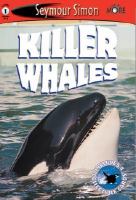
KILLER WHALES by Seymour Simon Book Review


1.      BIBLIOGRAPHY
Simon, Seymour. 2002. KILLER WHALES. San Francisco, CA: SeaStar Books. ISBN 1587171422

2.  PLOT SUMMARY
The killer whale is an animal that both intimidates and fascinates many people. In this easy reader, Simon introduces readers to the basic facts about killer whales. The orca, the name scientists use for the killer whale, is not a fish because “it does not have gills to help it breathe.” By using comparisons such as the female orca is as “long as an ambulance” or the male orca weighs as much “as two elephants”, the reader will have an easier time remembering basic killer whale facts. Whether it’s learning about what killer whales eat, where they live, how big they are or their family habits, this book will provide the basic information needed to begin research on this animal.

3.      CRITICAL ANALYSIS
The simple style and design of this book allows young readers the opportunity to learn on their own. Although there is not a table of contents or an index, the book consists of double page spreads for each new topic introduced. For each new page, there is also a double page photograph to support the text. Children will enjoy looking at actual photographs of the killer whale in its natural environment. The simple text is written in large print with only a few lines per page, thus enabling young readers to be successful. The contrast of white letters on the dark pages or black letters on the light backgrounds helps the text become easily visible. Seymour Simon does acknowledge use of the photographs, but there is not proof of accreditation for the text.

4. REVIEW EXCERPT(S)
SCHOOL LIBRARY JOURNAL REVIEW: “Simple sentences with easy-to-read phrases present an overview of these topics for beginning readers. Information is presented in just two or three sentences per page, and the large font size will make the books attractive to emerging readers. Simon's writing is clear and straightforward.”

PUBLISHER’S WEEKLY REVIEW: “With brief, accessible text, engaging topics and a perforated page of collectible cards Seymour Simon's See More Reader series will rope in even the most reluctant readers.”


5. CONNECTIONS
*Children can create a web with the killer whale as the topic in the center. Using information learned in the book, children can answer questions about the killer whale such as its eating habits, hunting habits and family style.

*Using the information learned from this book, students can conduct a mock expert interview. One student can be the host, creating questions about killer whales. The other student could be the expert, answering the questions based on what they learned from reading this book.

*Other books by Seymour Simon:
Simon, Seymour. ANIMALS NOBODY LOVES. ISBN 1587170809
Simon, Seymour. AMAZING BATS. ISBN 1587172615
Simon, Seymour. COOL CARS. ISBN 1587172372


Sunday, April 3, 2011

WHAT TO DO ABOUT ALICE? by Barbara Kerley book review


1.      BIBLIOGRAPHY
Kerley, Barbara. 2008. WHAT TO DO ABOUT ALICE?: HOW ALICE ROOSEVELT BROKE THE RULES, CHARMED THE WORLD, AND DROVE HER FATHER TEDDY CRAZY!. Ill. by Edwin Fotheringham. Broadway, NY: Scholastic Press. ISBN 0439922313

2.  PLOT SUMMARY
Some of us have always wondered what it would be like growing up in the White House, being the child of the President. In this delightful biography, readers can gain insight into Alice Roosevelt’s, daughter of President Theodore Roosevelt, life and happenings. The story begins with “Theodore Roosevelt had a small problem.” After naming all of the amazing adventures that were not the root of his problem, the reader learns the problem is his daughter Alice. Whether she was testing the springs on her grandparent’s sofa or roaming the streets of Washington, Kerley tells of Alice’s bold and courageous lifestyle. At the threat of being sent to boarding school, Alice decides to teach herself all she needed to know by spending endless hours reading anything she could find in her father’s library. By the age of 17, Alice moves into the White House and her adventures continue, or just begin. From entertaining guests with her pet snake, driving her car around town, traveling world wide or advising her father, Alice was definitely a lady who was adored by many, even if her father never could figure out “What to do about Alice?”  

3.      CRITICAL ANALYSIS
Barbara Kerley has written a number of picture book biographies. In her author’s note, Kerley thoroughly explains some of the information she mentioned in the book. Her accuracy is also shown by her acknowledgement of Carol Felsenthal for fact checking the text and the artwork of the book. The picture book format allows the reader to enjoy listening to a story about Alice Roosevelt’s life. The illustrations accurately depict the clothing and style of the time period, thus enhancing the authenticity of the story and supporting the text. The story follows a clear pattern, beginning with her early years and going all the way through adulthood. The story leaves the reader wanting to learn more about the crazy lifestyle of this president’s daughter.   

4. REVIEW EXCERPT(S)
BOOKLIST STARRED REVIEW: "Irrepressible Alice Roosevelt gets a treatment every bit as attractive and exuberant as she was....The large format gives Fotheringham, in his debut, plenty of room for spectacular art."

SCHOOL LIBRARY JOURNAL STARRED REVIEW: "Kerley’s text gallops along with a vitality to match her subject s antics, as the girl greets White House visitors accompanied by her pet snake, refuses to let leg braces cramp her style, dives fully clothed into a ship s swimming pool, and also earns her place in history as one of her father s trusted advisers. Fotheringham’s digitally rendered, retro-style illustrations are a superb match for the text."

KIRKUS STARRED REVIEW: "Theodore Roosevelt s irrepressible oldest child receives an appropriately vivacious appreciation in this superb picture book.... Kerley’s precise text presents readers with a devilishly smart, strong-willed girl who was determined to live life on her own terms and largely succeeded."

5. CONNECTIONS
*Students can create a timeline of Alice Roosevelt’s life. Depending on the grade level, using either picture cues or facts from the books, students can plot ten important events of her life on the timeline in chronological order. Be sure to include dates where applicable. 

*Students can complete a Venn diagram by comparing and contrasting young Alice Roosevelt with themselves. The teacher could require students to have 3 items in each part of the Venn diagram.

*Students could create a collage picture based on Alice Roosevelt. Using facts from the book, students could decide upon various adjectives about Alice (daring, creative, etc.).  These adjectives could be typed or written in fun font and pasted on the collage along with various pictures of Alice. Pictures could be drawn or printed from the internet.

*Other books by Barbara Kerley
Kerley, Barbara. THE DINOSAURS OF WATERHOUSE HAWKINS. ISBN 0439114950
Kerley, Barbara. WALT WHITMAN: WORDS FOR AMERICA. ISBN 9780439357913


Sunday, March 27, 2011

WE ARE THE SHIP: THE STORY OF NEGRO LEAGUE BASEBALL by Kadir Nelson review


1.      BIBLIOGRAPHY
Nelson, Kadir. 2008. WE ARE THE SHIP: THE STORY OF NEGRO LEAGUE BASEBALL. New York: Hyperion. ISBN 9780786808328

2.  PLOT SUMMARY
When we head to the baseball park to watch a game, most of us are oblivious to the long battle that many Americans had to fight before being allowed to play. In this wonderful story, Nelson shares the insights of the development of Negro League baseball from its beginning in the 1920’s to its end in 1947. Knowing the impact of hearing stories told directly from the players themselves, Nelson uses an “Everyone” player as his narrator in the book. This allows the reader to feel as if they are hearing the stories told firsthand, as if the player were telling them himself. Beginning with a foreword from Hank Aaron, the reader will be amazed at the segregation and hardships these players faced.

Told through innings instead of chapters, page after page the talent and obstacles of players are revealed. Bud Fowler, the first Negro to play professional baseball, invented the first shin guards because he was tired of being hit in the legs while playing catcher. On February 20, 1920, Rube Foster created the Negro National League with its own teams and rules to follow. Players would travel in ragged buses, have trouble finding places to eat due to their color and even play injured just to get a chance to play the game. Willard Brown, Satchel Paige, Norman “Turkey” Stearnes, Josh Gibson and more; all of these men had talents that were not acknowledged as they would have been if they were white. In the ninth inning, Jackie Robinson finally gets the chance to cross over to the Major Leagues and the rest is history.

3.      CRITICAL ANALYSIS
The book is organized just as a baseball game, in innings. Each inning takes the reader one step further in the development of the Negro League. To assure its accuracy, the author has included an author’s note, bibliography, filmography and endnotes to support his information. Even though there is not a table of contents, the index guides the reader to various people and features of the game. The illustrations are the strongest part of the book. Through his lifelike oil paintings, the reader can feel the heartache these great athletes faced on a day to day basis. The rich, authentic colors make you feel as if you are looking at the real thing, portraying the subject matter clearly and effectively. The “Everyone” narrator voice helps the reader feel like he is listening to a story, not just learning a list of facts. This book is a must read for every baseball fan.

4. REVIEW EXCERPT(S)
SCHOOL LIBRARY JOURNAL STARRED REVIEW: “Social studies teachers and baseball fans of all ages will covet this delightful winner of the 2009 Coretta Scott King author award and illustrator Honor award.”

BOOKLIST REVIEW: “If the story is the pitch, though, it’s the artwork that blasts the book into the stands. Nelson often works from a straight-on vantage point, as if the players took time out of the action to peer at the viewer from history, eyes leveled and challenging, before turning back to the field of play. With enormous blue skies and jam-packed grandstands backing them, these players look like the giants they are. The stories and artwork are a tribute to the spirit of the Negro Leaguers, who were much more than also-rans and deserve a more prominent place on baseball’s history shelves.”

2009 Sibert Medal

5. CONNECTIONS
*Students choose one of the famous players mentioned in the book. Using various resources such as books and the internet, students research their player further. Then, the students will become their player and write an “autobiography” to present in a living museum.

*Students can complete a Venn diagram comparing and contrasting Negro League baseball to Major League baseball. Be sure to include information about player salary, treatment of players and skills.  

*Visit http://www.wearetheship.com/ to learn more about the book, author and making of the book including photos and videos.


Wednesday, March 9, 2011

MIRROR MIRROR by Marilyn Singer review


1.      BIBLIOGRAPHY
Singer, Marilyn. 2010. Mirror mirror. ill. by Josee Masse. NewYork: Dutton Children’s Books. ISBN 9780525479017

2.  PLOT SUMMARY
In this collection of reversible verse, Marilyn Singer puts a twist on many of the classic fairy tales. This book contains fourteen different poems that are uniquely written so that they can actually be read traditionally, top down and also in reverse, from bottom to top. Some of the fairy tales mentioned are Cinderella, Little Red Riding Hood, The Ugly Duckling and The Three Little Bears. By changing only the punctuation as the poem is read in reverse, two different affects are created. In some of the poems, such as “The Doubtful Duckling”, the reader hears two different opinions from the same character. The first poem reveals the wishes of the ugly duckling turning into a swan. When it is read in reverse, the same ugly duckling is stating that he will always be ugly without any hopes of turning into a swan. Some of the poems, when read bottom to top actually reveals two different points of views from two different characters. For example, in “In the Hood”, when read from top to bottom, the reader is listening to Little Red Riding Hood’s point of view. When read in reverse, from bottom to top, the wolf’s view point is shown.

3.      CRITICAL ANALYSIS
MIRROR MIRROR is a collection of fourteen reverso poems all centered around one genre, fairy tales. Since most children are familiar with the characters in fairy tales, they will be able to connect with the characters in the poems. With the use of the reverso, readers will be able to enjoy the traditional behavior of the character along with a second viewpoint or perspective. Marilyn Singer’s use of figurative language has a unique way of forcing the reader to create a visual image in their head. Phrases such as “juicy and sweet”, “stubby and gray” and “fragrant green air” enhance each poem.

Josee Masse’s illustrations compliment the text. Just as the reverso poem shows a different viewpoint or perspective than the original, the illustrations do the same. On each page, the illustrations are divided almost in half. One side complements the first, original poem while the other half expresses the reverso poem. Within one illustration, the reader is able to see two different interpretations of the same situation. The contrast in bright colors and the evident symmetry immediately draw in the viewer’s eye. Children of all ages will enjoy these pictures.  

4. REVIEW EXCERPT(S)
SCHOOL LIBRARY JOURNAL review: “This is a remarkably clever and versatile book that would work in any poetry or fairy-tale unit. A must-have for any library.”

BOOKLIST review: “A must-purchase that will have readers marveling over a visual and verbal feast.”

KIRKUS starred review: “A mesmerizing and seamless celebration of language, imagery, and perspective."
5. CONNECTIONS
*At the end of the book, Marilyn Singer writes a short blurb about the reverso poem. Children can be challenged to write their own “reverso” poem either independently or with a group. When finished, these poems can be compiled to make a class poetry book.

*This book can be used to help teach character’s point of view. The teacher could read aloud one of the poems and students must guess which story is being referenced and who is talking.

*The illustrations can be used to discuss how different people or characters might view the same situation differently. Two children can be given a topic and then assigned a different perspective to illustrate their topic. When finished, compare and contrast the results and discuss why the illustrations might look different.


Saturday, March 5, 2011

BIRMINGHAM, 1963 by Carole Boston Weatherford review


1.      BIBLIOGRAPHY
Weatherford, Carole Boston. 2007. BIRMINGHAM, 1963. Pennsylvania: Wordsong. ISBN 9781590784402

2.  PLOT SUMMARY
Through the eyes of a 10 year old girl, the tragic story of the bombing of Sixteenth Street Baptist Church unfolds. Sunday, September 15, 1963 begins as a wonderful day for this young girl because it is her birthday. She receives her first sip of coffee as she practices for her upcoming solo at church. However, on this same day, someone planted dynamite under the steps of the church. Moments before her time to sing, the young girl’s plans are interrupted when a loud blast rocked the church. After witnessing blood spilled and her daddy crying, the young girl prayed herself to sleep that night wondering if it will ever be safe for children to play outside again.

3.      CRITICAL ANALYSIS
Carol Boston Weatherford’s choices of words help the reader hear this young girl, her hopes, dreams and fears. The language and dialect is evident of the time period in which the story occurred. Children will easily connect with the excitement of this young girl as she anticipates the excitement that accompanies a child’s birthday. The inclusion of blurbs about the four young girls who died that day allows the reader to see how real this was; how children like them were harmed out of hatred.   

The illustrations do a nice job of complimenting the text. By sticking with four basic colors of red, black, gray and white, the sullen mood of the text is carried over into the illustrations. Children’s items such as shoes, gloves, socks and bows are placed strategically on the light gray pages. Splashes of red design, representing the spilled blood, stand out on every page. Actual photographs of this tragic event convey the depth of destruction and heartache that was felt by many throughout the world.


4. REVIEW EXCERPT(S)
SCHOOL LIBRARY JOURNAL review: “An emotional read, made even more accessible and powerful by the viewpoint of the child narrator.”

LIBRARY MEDIA CONNECTION, starred review: “This is a reminder of a time when ordinary people became involved in extraordinary situations in the cause of freedom. This is a book that should be in every library collection.”

KIRKUS REVIEWS review: “Exquisitely understated design lends visual potency to a searing poetic evocation of the Birmingham church bombing of 1963...It's a gorgeous memorial to the four killed on that horrible day, and to the thousands of children who braved violence to help change the world.”

2008 Lee Bennett Hopkins Poetry Award

5. CONNECTIONS
*After reading, first allow students think time. When ready, the students can offer their thoughts and opinions not only about the book, but about prejudices and racism in general.
*Using the excerpts about the four young girls found at the end, students can choose which girl they are most alike. Either in small groups or through a written assignment, students can explain their choices.
*Other books relating to this topic:
Curtis, Christopher Paul. THE WATSONS GO TO BIRMINGHAM--1963. ISBN 0440414121
Woodson, Jacqueline. THE OTHER SIDE. ISBN 0399231161